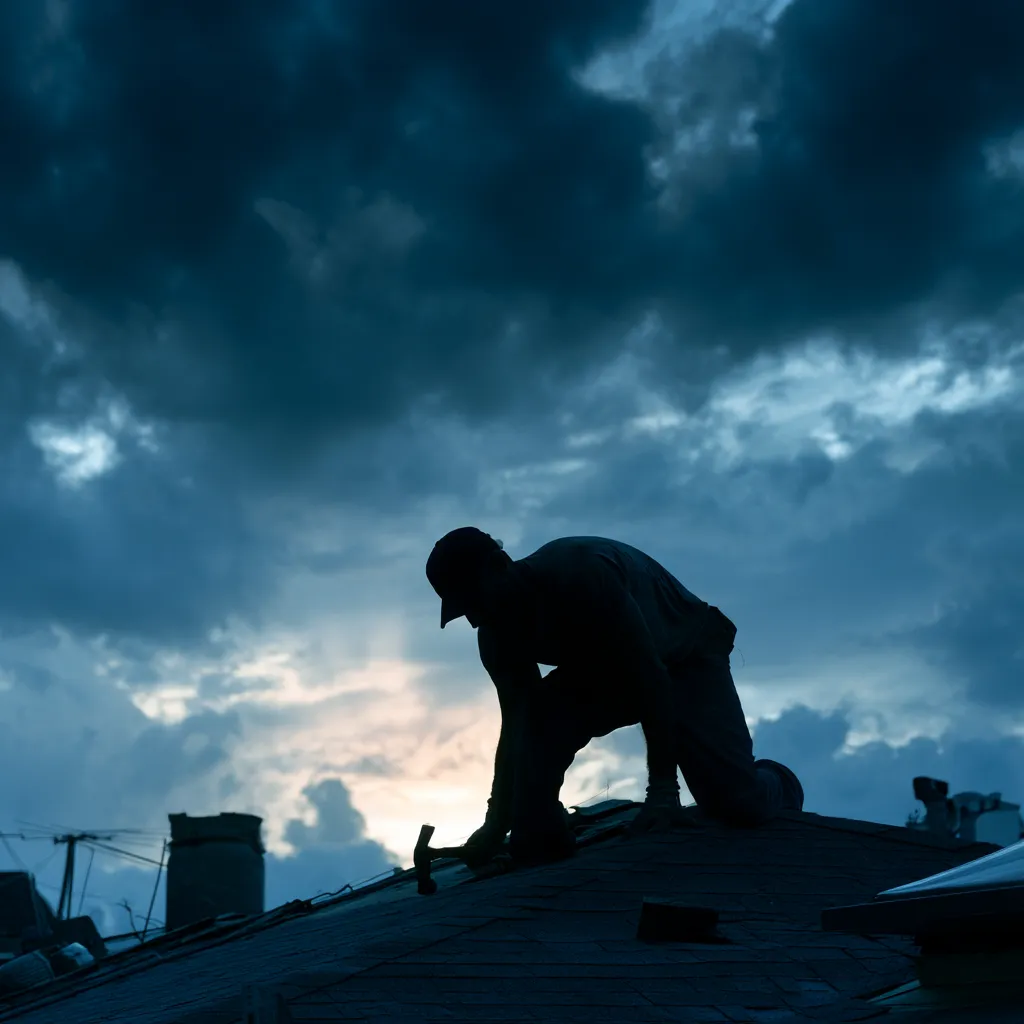
Skylight Installation in Garland, TX
Set right, flashed right, and priced on paper first.
A skylight stays dry through the flashing kit wrapped around it, not the glass overhead, so every install and leak fix here starts at that metal and the curb it sits on.
The flashing kit does the waterproofing
Think of a skylight as two systems doing separate jobs. The unit brings daylight into the room, and a flashing kit laced into the surrounding shingles does the actual waterproofing by steering rain around the opening. Whether that unit is curb-mounted, standing on a raised wooden frame above the roofline, or deck-mounted, sitting low and flashed right onto the deck, it stays dry only as long as the metal wrapped around it holds.
Most of Garland went up around 1980, so plenty of the original skylights are past forty now and have outlasted the flashing that was installed with them. The glass often still looks fine while the sealant and metal around it have dried out and split, which is why an aging skylight ranks among the more common leak calls across Dallas County. A local roofer reads the curb and flashing before anything else, sets or resets the unit with a fresh flashing kit, and water-tests the finished assembly before the job is signed off. When the shingles nearby are near the end anyway, re-flashing or replacing the skylight during a full roof replacement costs less and holds up better than opening the same roof twice.
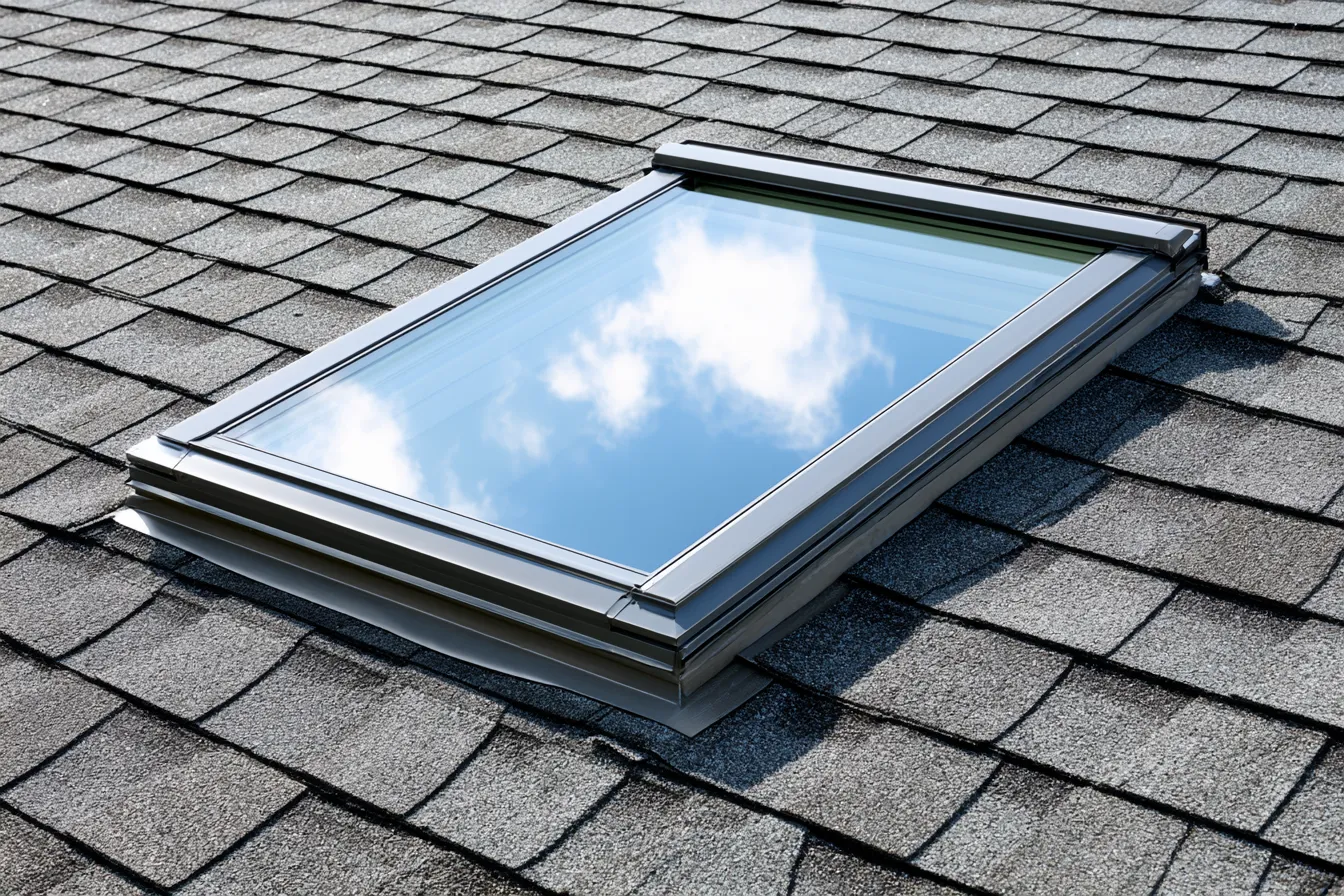
Signs a Garland skylight or its flashing is failing
The early tells that the metal, the seal, or the unit is on its way out.
- A spreading stain or brown halo on the ceiling directly beneath the skylight
- Fog or trapped moisture sitting between the panes of an older sealed unit
- Sealant that has gone hard and cracked, or flashing metal lifting away from the curb
- A dome that cracked or a lens that split during a hard Garland storm
- A cool draft, a musty smell, or a sliver of daylight in the attic around the skylight shaft
Any of these after a storm is worth a free look before the water finds the drywall. A local roofer can usually tell in one visit whether it is the flashing or the unit.
What a skylight job actually covers
From the curb up, every part read and tied back into the roof.
Water already showing up under a skylight? Start with a roof leak repair that pins down the real failure, curb, flashing, or the glass, before anything gets swapped out.
Reading the curb and old flashing
First look goes to the wooden curb and the metal wrapped over it, because a lifted or split flashing kit, not a bad pane, is where the large majority of skylight leaks actually begin.
Setting or replacing the unit
A worn unit comes out and a curb-mounted or deck-mounted skylight, sized to the opening, goes in its place, or, where you want new light, an opening is cut and framed square in a run of shingles that has room for it.
The matched flashing kit
A flashing kit made for that unit is woven into the courses of shingles around it so runoff passes over the top and sheds away, the one detail that separates a skylight that stays dry from one that weeps at the corners.
Water-tested and put in writing
Before anyone packs up, the finished skylight is run under water and photographed, so the seal is shown to hold instead of taken on faith, and the scope and price were already on paper before the first shingle moved.
The skylight options on the table
Pick by what the room needs, then match the mounting to the roof.
Fixed skylight
The simplest and most watertight choice: a sealed unit that does not open, built to pour light into a dim room or stairwell with the fewest moving parts to fail.
Vented skylight
Opens by hand or motor to let heat and moisture escape, which suits a kitchen or bath, and carries a little more cost for the operating hardware and its seals.
Tubular skylight
A small reflective tube that pipes daylight down into a hallway, closet, or bath with almost no framing, a low-cost way to brighten a windowless room.
Each of these is set as either curb-mounted, standing on a built-up frame above the roof, or deck-mounted, sitting low and flashed straight to the deck. Your roofer matches the mounting to the pitch and the look you want, and prices it in writing either way.
Why Garland homeowners reach out for skylight work
No upsell, no surprise line items, and the seal proven before anyone leaves.
The flashing gets fixed first
The roofer starts at the metal and the curb, where skylight leaks really begin, so you are not paying to replace a unit that was never the problem.
One written number, no surprises
The scope and the price land on paper before a shingle is lifted, in plain language, with no add-ons appearing after you have agreed.
Proven under water
The finished skylight is water-tested and photographed on the spot, so the seal is demonstrated rather than promised, and the record stays yours.
How a skylight job goes, start to finish
Read the flashing, agree the scope and number in writing, then prove the seal holds.
Read the Curb and Flashing
A local roofer gets on the roof, checks the curb, the flashing kit, and the unit, and photographs what is failing or what a new opening will take, so nothing is guessed.
Scope and Number in Writing
Replacing the unit, re-flashing the existing one, or cutting a new opening: what the job involves and what it costs is written down and agreed with you before any work starts.
Set It, Then Prove It
The unit and its flashing kit go in and tie into the shingles, then get water-tested on the spot, with the finished install photographed for a file that stays yours.
What a skylight costs, and where the money goes
Most of a skylight's price sits in the work around the glass, not the pane itself: the flashing kit, how it laces into the surrounding shingles, and whether the opening is already there or has to be framed. Resetting and re-flashing a unit that is already in place stays a modest repair, while cutting a brand new opening through a finished ceiling is the heavier job. The unit you choose shifts it too. A fixed skylight is the least expensive, a vented one adds cost for the operating hardware, and a tubular unit falls between the two. The most dependable saving is timing, since re-flashing or replacing a skylight during a reroof, with the deck already open, spares you paying to open the same roof a second time. The number goes in writing once a local roofer has read the roof and the opening, not before.
See honest roofing cost ranges- The flashing kit and the tie-in, not the glass, are where most of the labor sits
- A brand new opening in a finished ceiling runs more than resetting a unit already there
- A fixed unit keeps it lowest; venting hardware or a tubular run adds to it
- Bundling the skylight into a reroof, while the deck is already open, trims the cost the most
Any ranges are honest Dallas-area estimates, never a quote. Your real skylight number comes once a local roofer reads the roof and the opening.
Skylight questions
What Garland homeowners ask before adding or repairing a skylight.

Get your Garland skylight scoped and priced in writing
Point us at the problem, an old skylight that has started to drip or a bright idea for a dim room, and a local roofer will get on the roof, read the flashing and the curb, and hand you a written scope with one honest number before any shingle is touched. Decide on your own time.