
Roof Ventilation in Garland, TX
Balance the airflow, add years to the roof.
When a Garland attic has no way to vent its heat, the shingles slowly cook from beneath, so a local roofer reads the intake against the exhaust, balances the two, and gets the roof running cooler so it lasts the years you paid for.
Balanced airflow is what keeps a Garland roof from aging early
Ventilation is a loop, not a single vent. Fresh air is meant to be drawn in down low at the soffits, warm and rise, and push out high at the ridge, so the attic keeps flushing its own heat through the summer. Paint over the soffit intake or undersize the ridge exhaust and that circulation quits, leaving the heat to pool with no way out.
In a Garland July that trapped heat bakes the shingle mat from below, ages it years early, and can void the coverage you paid for. A local roofer puts the attic's real vent numbers on paper, sizes a balanced system to the roof, and shows you the plan before anything is cut. The cleanest moment to correct an under-vented attic is during a roof replacement, when the ridge is already open and the shingles are off.
Signs a Garland attic is under-vented
The tells that heat and moisture are stuck up top.
- An upstairs bedroom that stays warm well into the night no matter where the thermostat sits
- Shingles curling, blistering, or shedding granules years before their rated life is up
- A blast of trapped heat when you lift the attic hatch on a summer afternoon
- Rusty nail points, matted or damp insulation, or a musty smell in the attic
- Condensation or frost on the underside of the roof deck after a winter cold snap
Any of these is worth a look, because an attic that runs too hot is also the fastest way to lose shingle coverage. What that means for your specific roof is spelled out in roofing warranties.
What a ventilation job covers
Both sides of the loop, measured and set on the record, with the number agreed before a vent is cut.
Not sure the attic is breathing at all? A documented inspection puts the intake, the exhaust, and the attic temperature on paper before any work is proposed.
Size the vent area to code, not to guesswork
How much open vent area a roof needs is set by the attic floor's square footage, so a local roofer measures that first and sizes the fix to your house instead of eyeballing it by how many vents dot the roof.
Clear and baffle the soffit intake
Cool air has to enter low or the loop stalls, so painted-shut or insulation-buried soffit vents get opened and fitted with baffles that keep the intake feeding the ridge.
Balance the exhaust at the ridge
Once the intake is confirmed, a continuous ridge vent is cut along the peak and matched to that intake, so hot air leaves evenly instead of through a handful of scattered box vents.
Prove it moves air before sign-off
The finished loop is checked from eave to ridge, and the vent numbers and photos go into a file that stays yours, so the fix is on the record and not just a promise.
Ridge, box, or turbine: the exhaust choices
All three move air out; they just do it differently. Here is the plain trade-off on each.
Continuous Ridge Vent
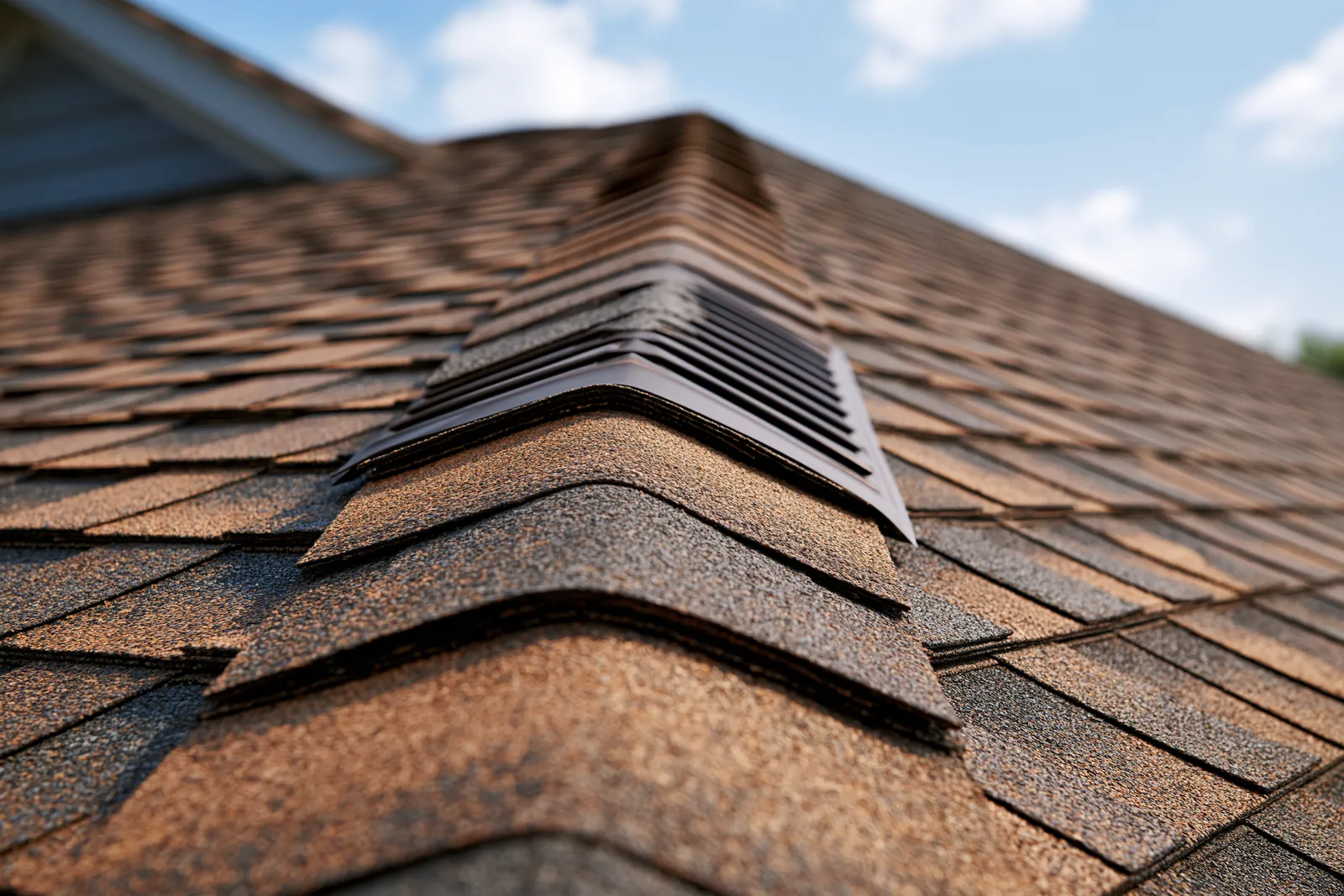
A vent cut the length of the peak and capped with matching shingles pulls hot air off the whole roof evenly, and it nearly disappears from the curb. On most Garland roofs with a workable intake, this is the cleaner long-term answer.
Box Vents
Static box vents exhaust through a few scattered points near the ridge. They cost less to add, but each one clears only the roof around it, so an attic can still hold heat in the gaps between them.
Turbine Vents
The spinning whirlybird moves air when the wind blows and stalls when it does not, and the bearings wear, wobble, and squeak with age. It is common on older Garland roofs but rarely the pick for a fresh, balanced system.
Never Mix Exhaust Types
Ridge vents, box vents, and turbines on the same attic pull against each other and short-circuit the airflow, so a roofer sets one exhaust type matched to the intake rather than a blend.
Which exhaust suits your roof comes down to the intake it can feed and the shape of the roofline, and a local roofer sizes that to the attic rather than selling you the most vents.
Why Garland homeowners reach out for a ventilation check
Measured, written down, no upsell.
Measured, not guessed
The vent area your attic carries now is measured against what its square footage requires, so the fix is sized to the roof instead of sold by the vent.
The number in writing first
The scope and one honest price land on paper before a vent is cut, so nothing about the job moves after you agree to it.
Built to keep the warranty
A balanced intake-and-exhaust system is sized to code and to the shingle maker's terms, so the roof keeps the heat coverage you paid for.
How a ventilation fix goes
Read the attic first, put the number in writing, then prove the loop works.
Read the Attic
A local roofer starts in the attic, not on the roof, measuring the vent area you have now and reading the heat, the damp spots, and the rust that show the loop has stalled. Every finding is photographed before a number is put to it.
Number in Writing
What the roof needs to reach a balanced system, and what it costs, is written down and agreed with you first, so the scope and the price are both settled before a single vent is cut.
Prove the Loop
With the intake and exhaust set, the airflow is checked from eave to ridge, and the finished system, its measurements, and its photos go into a file you keep.
What a ventilation fix costs, and what it saves
A ventilation correction is a small fraction of a new roof, and on a Garland home it tends to earn its keep twice: a cooler attic eases the load on the air conditioner through a long Texas summer, and a shingle mat that is not baking from below reaches the lifespan you actually paid for. The price comes down to how much intake has to be opened, whether a ridge vent is cut or box vents swapped, and what the attic measures out to need.
See honest cost ranges- How much soffit intake has to be opened or added
- Whether the fix is a cut-in ridge vent or a swap of tired box vents
- The size of the attic and how far out of balance it sits now
- Whether damp decking turned up and has to be handled first
Any range is an honest Dallas County estimate, not a quote. Your real number comes from the attic measurement and goes in writing first.
Roof ventilation questions
What Garland homeowners want to know about attic heat, ridge vents, and warranties.
Find out if your attic is aging your roof
Tell a local roofer what the upstairs rooms and the attic are doing in summer, and you will get the vent area measured, a balanced fix sized to the roof, and one honest number on paper before anything is cut. Decide on your own time.